
Credible Before Visible: Rethinking Financial Inclusion for Women-Led Businesses
By Kim Gyi, Good Return Board Member

Sunarti
Sunarti lives in a remote village near Garut in Central Java, Indonesia. She began her chilli business with a few plants in a small plot behind her home. As demand grew, she expanded onto a nearby piece of land, employed local pickers and harvesters, and sold her produce through the local cooperative. Wholesalers continued asking whether she could grow more.
Sunarti had built a real business. It had customers, demand, workers and the potential to expand. But would a formal financial institution see what was already there?
This is the challenge facing many women running micro and small businesses across emerging and frontier markets. Their businesses may be viable, their customers may trust them, and their communities may recognise their credibility. Yet they can remain largely invisible to the formal financial system.
The question is often framed as: how do we make these women investment-ready? But for many micro and small enterprises, investment is not what they need. They are not necessarily seeking equity investors, impact funds or venture capital; they may simply need an appropriately structured loan, working capital, inventory financing, insurance, a secure way to save, or access to payment services that allow the business to grow. The more relevant question is whether they are considered lendable—and how that judgement is made.
Credibility is not the same as visibility
Throughout my work across emerging and frontier markets, I have encountered many women who built functioning businesses from very little. They understood their customers, they managed irregular cash flows, they adapted quickly when market conditions changed, and they balanced business responsibilities with household and caring responsibilities, often without formal support. Yet conventional lending assessments did not always capture these capabilities.
A woman may not have audited financial statements, registered collateral or a conventional credit history. Her business and household finances may overlap. Some transactions may happen in cash, and business records may be informal. To a formal system, these can appear to be gaps, but the absence of conventional documentation does not necessarily mean the absence of a credible business.
The evidence may simply sit elsewhere: in consistent sales, inventory turnover, supplier relationships, customer demand, repayment behaviour, community reputation and the entrepreneur’s ability to manage through periods of uncertainty. A business can be credible long before it becomes visible to the formal financial system.
When the assessment criteria do not match reality
Lending criteria exist for good reason. Financial institutions must protect depositors, manage risk and lend responsibly. Financial inclusion should never mean extending unsuitable debt or overlooking a borrower’s capacity to repay.
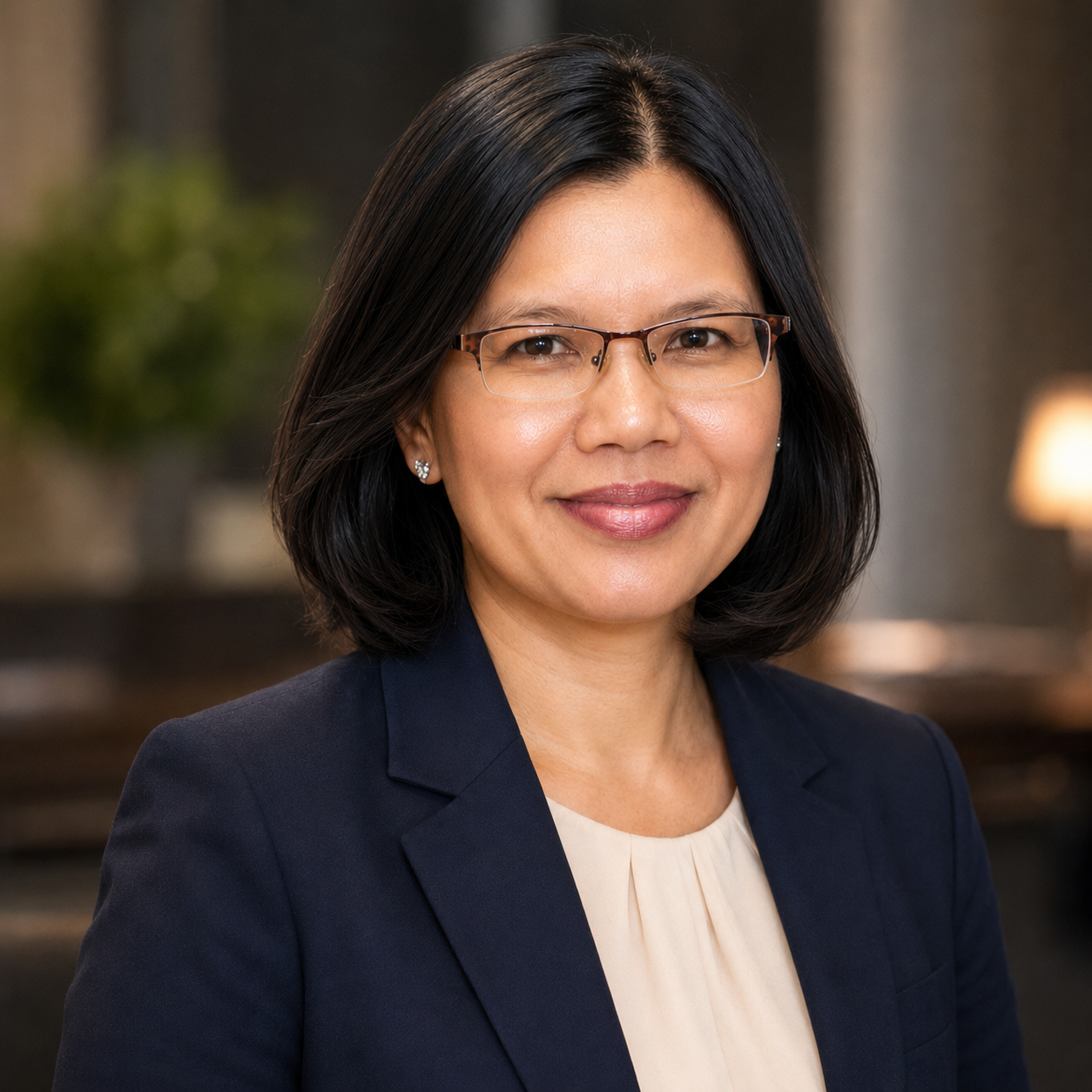
Kim Gyi
But responsible lending also requires us to ask whether the information used to assess a business reflects how that business actually operates. In emerging and frontier markets, the information presented on paper is rarely the whole story. This is particularly true for micro and small enterprises.
During my own work in financial services, I sometimes found that the formal assessment criteria did not match the reality on the ground. Rejecting an application because it failed to fit the standard model may have been procedurally simple, but it did not always produce the right judgement.
I had to consider what other evidence mattered. Was there sustained demand for the product? How did money actually move through the business? How quickly did inventory turn into sales? What was the entrepreneur’s history with customers and suppliers? How had she responded to previous disruptions? What did local knowledge reveal that the application could not?
Human judgement was not a substitute for sound credit assessment. It was part of making that assessment more complete. Without it, systems can confuse informality with unreliability and limited documentation with limited capability.
Lendable, credible and financially included
These three ideas are related, but they are not interchangeable. A business is credible when there is reliable evidence that it is genuine, viable and responsibly managed.
It is lendable when it has the capacity to take on and repay appropriately structured credit.
An entrepreneur is financially included when she can access and meaningfully use suitable, affordable financial services—not merely when an account has been opened in her name. A woman may run a credible business but remain excluded because the financial institution cannot recognise her evidence. She may be lendable, but only through a product designed around the cash-flow patterns of her business.
For example, inventory financing may allow a business to purchase inputs or stock when needed and repay the facility as that inventory is sold. For a seasonal or rapidly growing enterprise, this may be far more appropriate than a conventional loan with a rigid repayment schedule. Access to credit alone will not create meaningful inclusion if the amount, terms, repayment schedule or service model do not reflect how the business operates.
This is why financial inclusion cannot be measured only by the number of products provided or accounts opened. We must also look at whether people can use those services safely, confidently and productively. AI may help financial institutions identify patterns and alternative evidence that conventional assessments overlook. But a pattern is not the same as understanding. In emerging and frontier markets, what appears in the data and what is happening on the ground are not always the same. Technology should strengthen assessment, not replace human judgement, local knowledge and accountability.
Who must become ready?
Women entrepreneurs are frequently told that they need more financial literacy, stronger records, better governance and greater business capability. These forms of support can be valuable and can help businesses grow. Good Return’s work with locally led organisations recognises the importance of building capability alongside access to finance.
But there is another side to the equation. Financial institutions must also become better at recognising different forms of credibility. They need assessment approaches that combine financial discipline with local knowledge, behavioural evidence and a realistic understanding of how micro and small businesses operate. Technology and alternative data may help. So can cash-flow-based lending, inventory financing, appropriately designed products and partnerships with organisations that understand local communities. But none of these removes the need for thoughtful human judgement.
The objective is not to lower lending standards for women. It is to ensure that the standards distinguish genuine risk from evidence that simply does not conform to a conventional model.
Sunarti’s chilli business did not become credible when a formal institution recognised it. Its credibility was already visible in the demand for her produce, the people she employed and the business she had built.
The challenge for financial inclusion is to see that reality clearly—and to design responsible pathways through which credible women-led businesses can access the financial services they need to grow.
Perhaps the question is no longer whether women like Sunarti are ready for finance. Perhaps it is whether our financial systems are ready to serve them.